Humankind and the infinite resource base
This paper examines the human ability to expand our resource base into infinity. Given human ingenuity and the free markets, …
This paper examines the human ability to expand our resource base into infinity. Given human ingenuity and the free markets, …

Debate about capital gains tax rarely occurs in isolation. It typically emerges during periods of fiscal pressure, housing market stress, or broader dissatisfaction with economic performance or income and wealth distribution.

The criticisms and characterisation of the 50% capital gains tax discount over many years have been full of misunderstandings, myths …

This paper argues that Australia’s housing crisis is primarily a supply failure, not simply a headcount problem.
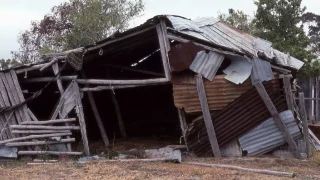
Introduction Several states have recently overhauled their planning legislation. However, the flaws in their heritage legislation put clearer and more …

Executive Summary Public debate about the ‘cost-of-living crisis’ often confuses nominal price increases with declining affordability. This paper argues that …

Executive Summary At the centre of Australia’s mental health system lies a paradox. Government spending has soared, doubling and redoubling …
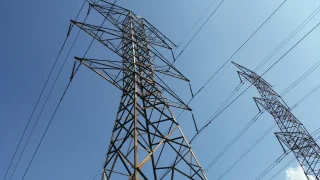
Trouble has been brewing in Australia’s smelting paradise over the last two decades, as rising energy prices, carbon charges and foreign competition have taken their toll
Introduction Australia’s natural gas sector has transformed dramatically between 1975 and 2025. What began as a series of isolated gas …

Executive Summary Australia’s tobacco control policy has reached a breaking point. For decades, bans on advertising and steady excise increases …

Protecting one industry imposes a burden on the competitive sectors that actually prop up our prosperity, such as mining, energy and agriculture.

Australia has a mental health crisis, but not the one we think. Despite decades of soaring expenditure, our national mental …

Anyone watching the smoke signals from Canberra knows that moves are afoot to try and increase capital gains tax (aka …

Australians were losing faith that the combination of Labor’s economic policies and the RBA monetary policy would tame inflation even before Donald Trump and Benjamin Netanyahu started bombing Iran’s theocratic dictators.

Labor has long held an axe over the capital gains tax 50% discount and negative gearing; campaigning on it in …

Even before new Middle East conflict sparked concern about petrol prices, Australia’s latest CPI release had reignited familiar anxieties about …

As recently reported in The Australian Financial Review, autism costs the National Disability Insurance Scheme more than $10 billion annually. A record 62,500 people …
A brief glance at the past fortnight’s headlines is revealing. High-speed rail is connecting Sydney to Newcastle. A Regional Australia Institute poll shows Gen Z is interested in moving …

The government has been rightly blamed for fuelling the inflation flames with too rapid growth of its own spending. This has come not just from the federal government but from several state governments as well.

The decisions that made higher rates unavoidable were taken in Canberra. If inflation is the fire, interest rates are the fire brigade. Labor lit the match.

The criticisms and characterization of the 50% capital gains tax discount over many years have been full of misunderstandings, myths …
Marian Tupy — editor of HumanProgress.org, senior fellow at the Cato Institute, and co-author of Superabundance — makes a data-driven …

Peter Tulip explains how several states have recently overhauled their planning legislation. However, the flaws in their heritage legislation put …
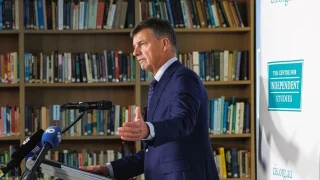
Speaking at his first address outside Canberra since being elected Leader of the Opposition by the Liberal Party room, Angus …
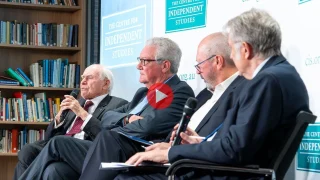
Alexander Downer and former Prime Minister John Howard join author Tony Parkinson and CIS Executive Director Michael Stutchbury for a …
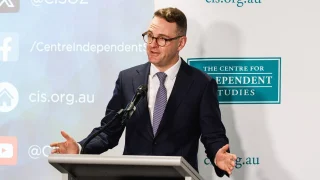
Senator Andrew Bragg and economist Peter Tulip join Michael Stutchbury for a wide-ranging conversation on Australia’s housing crisis, the politics …
Ever wondered how governments keep massive spending hidden from the public eye? In this eye-opening video, we dive into the …
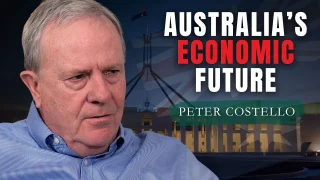
From economic reform and rising government spending to cultural shifts and the decline of liberalism, Costello reflects on the ideas …

At this Centre for Independent Studies lunch forum on 20 October 2025, Opposition Leader Sussan Ley delivered a major address …

Where is the line between risk and regulation? In this episode of The Stutchbury Sessions, Fred Roeder from the Consumer …

The federal government should pause increases in tobacco excise to weaken the profit of the black market. Australia’s aggressive policy of continuously hiking tobacco excise has created a multi-billion-dollar illicit market, inadvertently turning a public health initiative into a significant funding stream for criminal organisations.

Despite good intentions, Australia’s Early Childhood Education and Care system has expanded well beyond its original purpose as a work …
The Productivity Commission’s statement that careful emissions reduction policy design will enable gains in productivity and living standards is unfounded. …
This submission argues that NSW’s heritage legislation has serious flaws. In particular, costs of listing are not compared with benefits. …
Victoria Planning Provisions Amendments VC257, VC267 and VC274: Submission to Victorian Legislative Council Select Committee Inquiry 1. Introduction Housing in Victoria, …

Regulation of the financial system is needed to protect depositors and avoid financial crises. However, current financial regulations go beyond these legitimate objectives to prevent mutually advantageous loans.

Submission to the Senate Economics Legislation Committee in relation to its inquiry into the Better Targeted Superannuation Concessions and Other Measures Bill.
Housing policy in NSW has been failing. It has relied on setting targets for local governments and hoping councils would adhere to them. Those targets are too low, out of date and have not been enforced. As a result, the housing affordability crisis is getting worse.
Allowing first home buyers to borrow from their superannuation would transform superannuation from an obstacle to home ownership into a vehicle towards it.

Rents are too high. This leads to homelessness, rental stress, long commutes, overcrowding, and a host of other social problems. …